Key takeaways
- How staying in your native language can help a record travel beyond your local scene.
- Why blending genres works when the artist’s identity stays consistent.
- How mastering determines whether a track holds up across real-world listening environments.
- How the right studio, engineers, and recording setup shape the final record more than most artists realize.

How does an artist who never switched to English end up running global charts?
Bad Bunny didn’t bend to the industry. He pulled it toward him.
He sits at the top because the numbers back it up. Streaming records, sold-out tours across continents, and albums that stay in rotation long after release. His music travels without needing translation, and the Grammy wins only confirmed what listeners were already hearing.
Bad Bunny makes records that feel alive. Reggaeton, Trap, and Caribbean rhythms sitting in the same space without sounding stitched together.
He writes about love, heartbreak, and pride in where he’s from. The delivery stays raw. The energy stays intact. Nothing feels cleaned up for approval.
It moved past local scenes and started showing up everywhere.
Latin urban music moved from regional stations into global charts. You hear it in clubs, gyms, and playlists in places that don’t speak the language.

That reach brought awards, including Grammys, but more importantly it changed what people accept as mainstream.
That kind of sound gets built before anyone steps on stage.
It’s built in the studio. In recording choices. In what gets left in the take. In how the track is arranged before anyone hears it.
Artists in Miami and everywhere else can take something from that. He didn’t trade identity for reach. He built with it.
That approach changed how people think about reaching a global audience.
It comes down to a handful of choices that shaped how his music was made and released.
#1 Doubling down on native language and culture
For years, Latin artists were pushed toward crossover records.
That usually meant one thing. Switch to English. Tighten the delivery. Make it easier for radio in the U.S.
Bad Bunny ignored that.
He kept the records in Spanish. Not neutral Spanish either. Puerto Rican slang, local phrasing, references that don’t translate cleanly.
Nothing was adjusted to make it easier to export.
Un Verano Sin Ti pushed that approach as far as it could go. A full Spanish album, built on those choices, ended up nominated for Album of the Year.
That doesn’t happen if the music feels diluted.
When an artist leans fully into where they’re from, it changes how the record feels. The vocals sit differently. The writing sounds more natural. The delivery stops sounding rehearsed.
You can hear when someone is reaching for a wider audience. The tone shifts. The words get safer.
He never did that.
Instead, he made listeners meet the record where it was. Rhythm carried it. Tone carried it. Energy carried it.

You don’t need to understand every word to understand how something feels.
That’s why the music traveled.
For artists working now, especially outside the usual markets, there’s something obvious in that approach.
Trying to match another city’s sound usually flattens your own. The accent slips. The writing loses detail. The production starts to sound like everything else in rotation.
Records stand out when they carry a place with them.
That shows up in small decisions. The words you keep. The way you phrase a line. The sounds you choose to leave in the beat.
Records like that take shape in the recording studio. Identity shows up in those moments. In how the artist delivers a line and how the engineer chooses to keep it.
That’s where the sound locks in, before anything gets released or packaged.
#2 Defying genre boundaries in production
Bad Bunny doesn’t stay in one lane, and you hear that right away.
He moves between Reggaeton, Latin Trap, Rock textures, and older Caribbean salsa without making it feel like a switch.
The albums change, but the voice stays consistent. The tone, the delivery, the way he sits on a beat. That’s what holds it together.
Most artists are pushed to lock into one style early. It makes them easier to place, easier to market, easier to playlist.
He never allowed himself to be boxed in like that.
In his records, genres aren’t separated. They sit in the same session. A drum pattern might come from reggaeton, while the melody leans somewhere else entirely.
You’ll hear live elements come in where most people would stay fully digital. Guitars, softer percussion, textures that don’t usually show up in urban records.
None of it feels added for effect. It sounds like it belongs there.

Mixing urban energy with alternative sounds
Debí Tirar Más Fotos pushed that approach further.
It brought reggaeton and trap into the same space as traditional Puerto Rican sounds and stripped-back instrumentation.
The energy stays, even when the sound pulls in a different direction.
Some records pull back on heavy drums and let space do more of the work. Others still hit hard but carry different textures underneath.
That balance is hard to get right.
When artists experiment like this, the record can lose direction fast. Either it sounds scattered, or it leans too far away from what made people listen in the first place.
He kept the identity intact while changing the frame around it.
That’s what made the album hold together from start to finish.

Collaborating outside of the comfort zone
The collaborations follow the same pattern.
He doesn’t just bring people in for reach. He brings them in for contrast.
Different producers, different writers, different approaches to building a track.
That changes how the sessions feel. New rhythms come in. Different choices get made early.
It keeps the sound from repeating itself across projects.
You can hear when a record comes from the same circle every time. The structure stays the same. The sounds don’t move much.
His catalog avoids that.
What to consider when experimenting with sound
Blending styles sounds good on paper, but it gets technical fast once you’re in the session.
Low end can clash. Live instruments can fight with programed drums. Vocals can feel out of place if the production shifts too much around them.
So the details matter more.
Bass and tone: Trap bass and live instruments need space. If they overlap, the record loses clarity.
Vocals: The treatment has to match the record. A dry vocal won’t sit the same on a heavy reggaeton track as it would on something more stripped back.
Song layout: Not every track needs a standard structure. Some ideas land better without forcing a hook too early.
Real instruments: Live elements add depth, but only if they’re recorded well and sit properly in the mix.
Engineer: A strong engineer keeps all of this from falling apart. They make sure the record translates outside the studio.
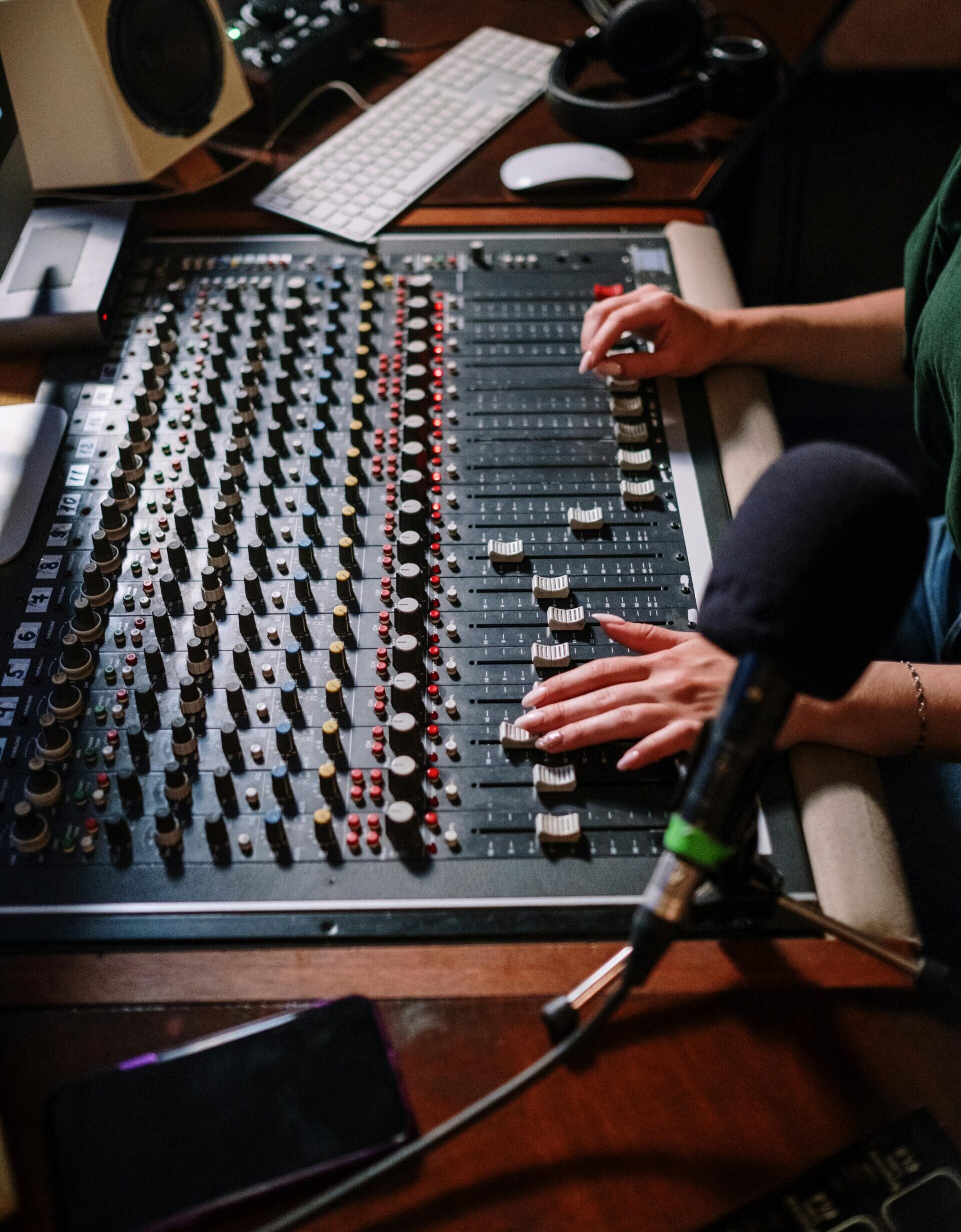
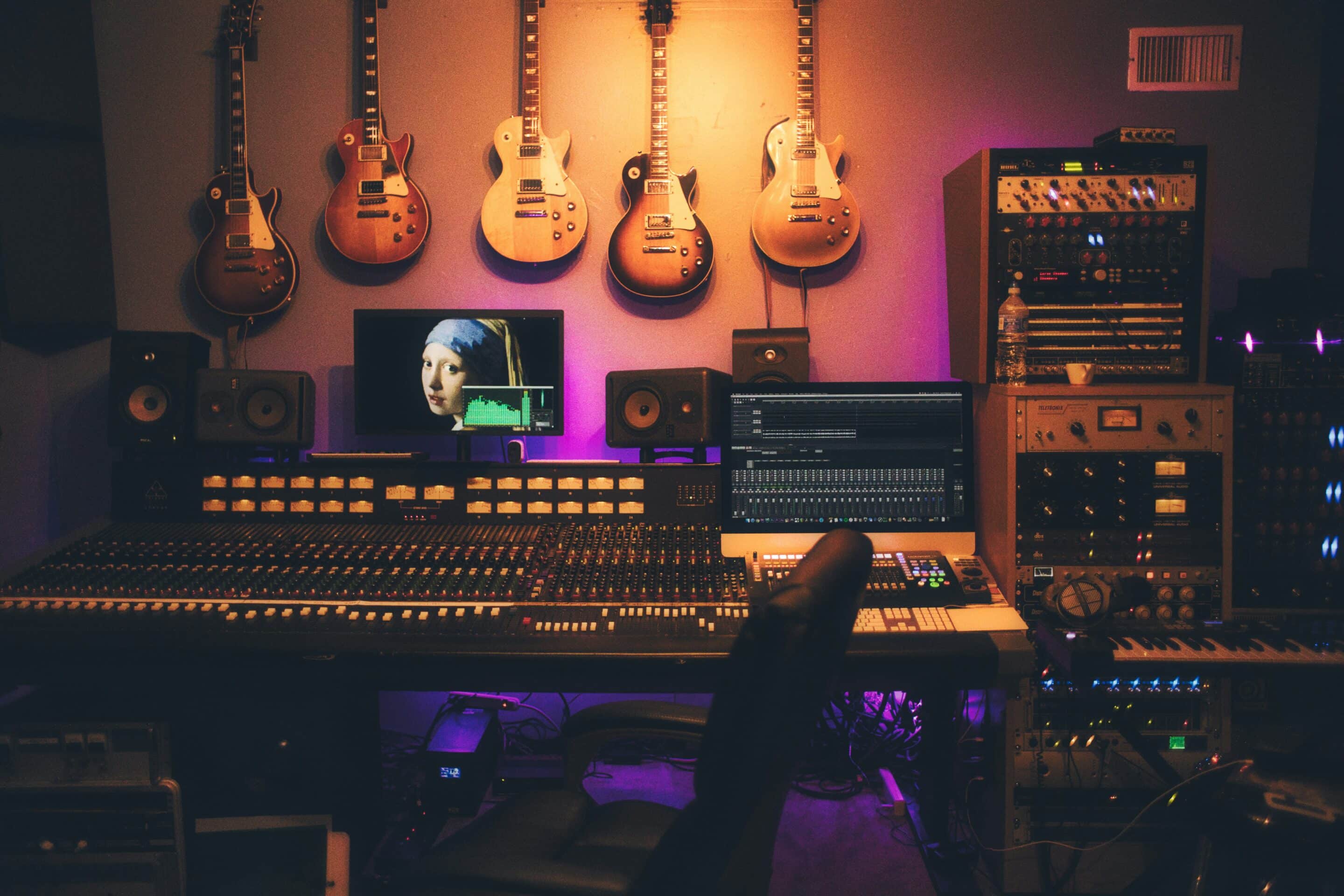
The recording room matters more than people think. Monitoring, acoustics, and how cleanly you can hear decisions all affect the final record.
Because once the track leaves the studio, it has to hold up everywhere.
Streaming platforms, cars, small speakers, earbuds.
That’s where mastering comes in.

#3 Mastering for streaming dominance
A lot of Bad Bunny records aren’t pushed in a way that feels aggressive.
They sit right. The low end stays consistent. The vocals are easy to understand without sitting too far on top. Nothing jumps out in a way that throws the track off balance.
That control comes from mastering.
Once the mix is done, the record still has one more job. It has to translate everywhere.
Phone speakers. Cars. Clubs. Cheap earbuds. Playlist autoplay next to completely different songs.
If the master isn’t right, the record loses weight outside the studio. The bass drops out. The vocal gets buried. The energy feels smaller compared to what plays before or after it.
His catalog holds up across all of those spaces.
Even the more stripped-back records keep their balance. The impact stays consistent.
This is where a lot of artists lose the record.
Time goes into writing and recording, then the final stage gets rushed. But this is where everything locks in. Small adjustments here change how the song feels in real listening situations.
And when you’re blending genres, it gets more sensitive.
Live instruments, heavy drums, layered vocals all compete for space. If they aren’t controlled properly, the record starts to blur.
A strong master keeps everything in place while letting the track breathe.
That’s where the room and the engineer matter. You need a space where you can hear low end accurately and catch problems before the record leaves the session.
Because once it’s out, it has to stand next to everything else people are playing.

Investing in the songwriting process
Mastering won’t fix a record that isn’t working at its core.
Bad Bunny’s tracks hold because the writing lands. The melodies land. The phrasing feels natural. The hooks are simple, but they stay with you.
That gives the production something to build on.
A lot of that comes from collaboration.
Different writers bring different rhythms and ways of landing a line. It keeps the song from feeling one-dimensional.
You hear it in how the records move. Nothing feels forced, and nothing drags.
The importance of proper recording gear
Once the song is there, how you capture it starts to matter more.
Vocals recorded through a proper chain sit differently. They feel closer, with more detail in the performance. You don’t have to force them into place later.
The room plays a role too.
If the space isn’t treated, low end builds up in the wrong places and throws off your decisions. You end up correcting things that should have been right from the start.
A controlled setup lets you hear what’s actually happening as you record.
That carries through into the final master.

What a real recording session looks like
A real session shapes the record while it’s being made.
You’re not just tracking vocals. You’re adjusting takes, refining delivery, and making small calls that affect the final sound.
Engineers guide that process. They catch timing issues, push for better takes, and keep things moving.
You’re also working in a space built for listening.
Playback is accurate. You can trust what you’re hearing. If something feels off, you catch it early instead of after release.
And just as important, the environment stays locked in.
No distractions, no technical problems slowing things down. Everything is set up so the music can move forward and decisions can be made with confidence.
Carrying this into your own sessions
When an artist looks to building a Grammy moment like Bad Bunny did, they must realize it doesn’t come down to one big move but a series of decisions that build on each other. The sound stays tied to where it comes from. The music production keeps evolving without losing identity. The records are finished in a way that holds up everywhere people hear them.
That same approach can be applied to your own work.
Spend time refining the parts of your sound that feel honest to you. Take your writing seriously before you step into the booth. Work in spaces where you can actually hear what you’re making, and where the people around you can push the record further. Then go back to your releases and listen closely. If something feels off, fix it before moving on.
That’s how records start to carry weight, and how a catalog begins to stand on its own.