Recording for Lux was a global process that took in Miami, Los Angeles, Seville, and Saint-Rémy-de-Provence among other places. Sung in 14 languages, the album has received praise from the Catholic Church, the Prime Minister of Spain, and critics. Want to know how this album has garnered near universal acclaim? We’ve got you covered with a deep dive into the production secrets behind Lux.
How To Make an “Art Pop” Song
- Choose a topic that doesn’t directly relate to you
- Explore a “forgotten”genre like classical or flamenco
- Incoporporate handclaps
- Use samples sparingly
- Juxtapose sweet melodies with explicit lyrics
We AreMIami's #1Recording Studio
Who Is Rosalia?
Catalonian singer Rosalia’s sound is constantly evolving. Being guided by her own curiosities rather than what she thinks will be most successful has made her a trendsetter. While her debut helped inspire a flamenco revival, her latest work is changing the mainstream perspective of classical music.
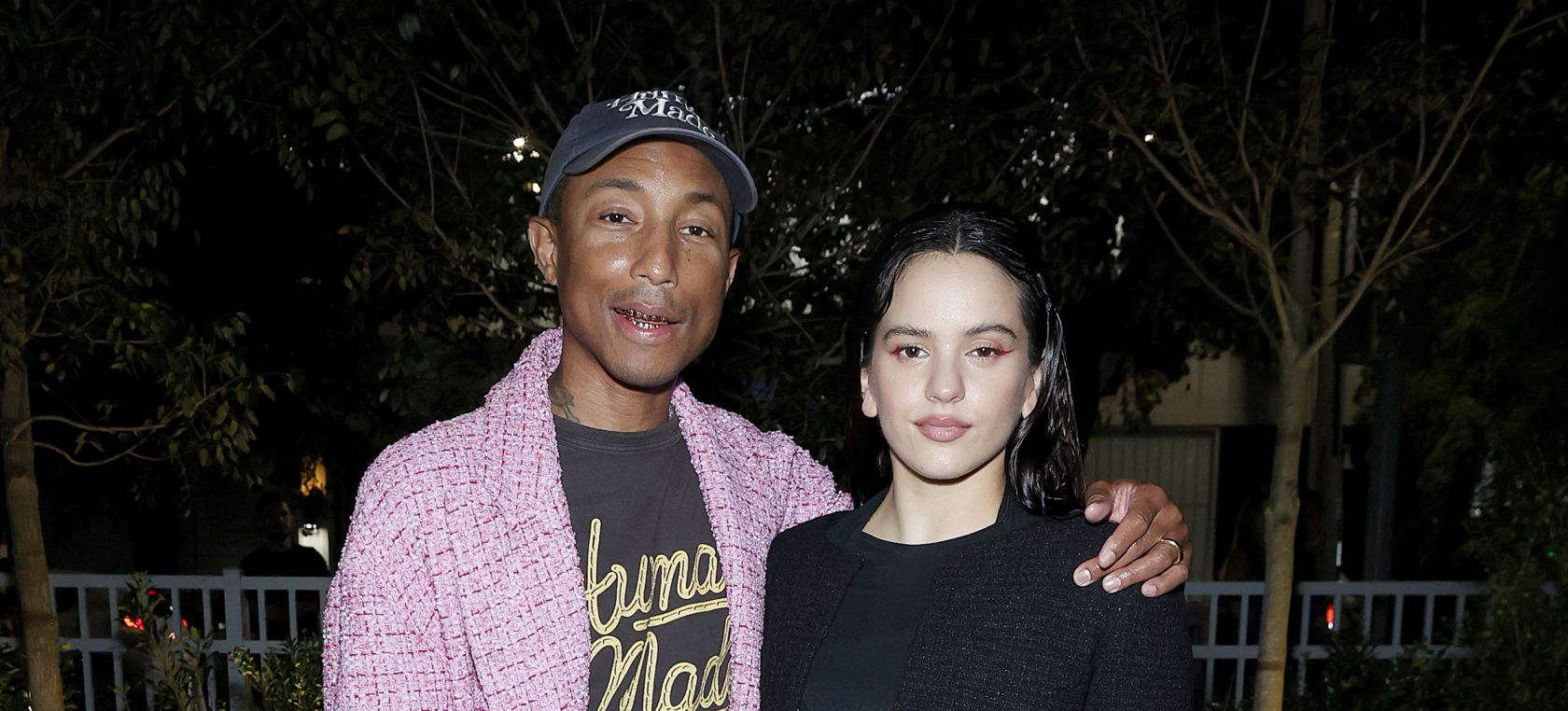
The track “Hentai,” featured in the singer’s third album Momotami, has a minimalist production. The production team included Noah Goldstein, Pharrell Williams, Rosalia, and Michael Uzowuru. The piano ballad, which also includes violin, was arguably a glimpse into where Lux would take her.
Set to star in Season 3 of Euphoria, Rosalia is bound to enter another level of fame in 2026.
Much of Rosalia’s music is focused outside of her personal life. It allows her to make albums not contingent on her makeups and breakups, which gives her an advantage over many of today’s popstars.
“I think that’s what my favorite artists do. They are vessels,” she told NPR.
How Does Noah Goldstein Produce a Song?
Engineer, mixer, and producer Noah Goldstein’s credits include Kayne West, Frank Ocean, FKA Twigs, and Bon Iver. The Senior Vice President of A&R for Columbia Records somehow found time to work on Rosalia’s album. Perhaps it’s because Goldstein, who got his start as an intern at Greenhouse Studios in Iceland, has collaborated with the artist before. Or maybe it’s because the Bjork connection made this project a full circle moment.
Goldstein admits that recording on the road forced him to relinquish his pickiness over gear. His setup includes a portable rig, KRKs Rokit 5 and Rokit 8 monitors, and ATC SCM25A speakers. He doesn’t do any room treatment, explaining that one of the most important things he’s learned from recording in hotel rooms is that the energy is more important that the equipment (especially when you have access to a high-end studio you can use for mixing and mastering).
“Goldstein told High Snobiety that, “As a producer, I love helping people create something that they feel happy about and get exactly what their vision is that they wanted to get across; that’s really important to me.”
View this post on Instagram
Goldstein considers much of his production technique a trade secret, but he did admit that he’s a fan of 808s, and he likes to use Reverb generously.
‘I’m not going to have a sound’ was something I started out my career saying, but I think what happens is that you end up having a ‘sound’ no matter what. – Noah via Music Business Worldwide
How Does Pharrell Williams Produce a Song?
He’s worked with Gloria Estefan, Kendrick Lamar, and Hans Zimmer. Even before the genre divide was as permeable as it is now, producer, composer, and fashion designer Pharrell Williams was just as likely to
The Neptunes
Pharrell’s musical career started with The Neptunes, which he and former friend Chad Hugo created together. The duo, which was inducted into the Songwriters’ Hall of Fame in 2020, wrote and produced many earworms together starting in the late 90s. They produced hits like Kelis’ “Milkshake,” Usher’s “U Don’t Have to Call,” and Gwen Stefani’s “Hollaback Girl.”
The Neptunes would often source drum patterns from the Korg Triton synth or from drum packs and sample them into the ASR 10. Pharrell, a drummer, often added hand percussion like tambourines, shakers, and cowbells. His distinct style incorporated syncopation and playing accent notes on hi-hats. Sparse bass lines and major 7th chords were also a key part of The Neptunes’ sound.
Fun Fact: Pharrell and Timbaland are related. They went to the same high school and were both part of a pre-Neptunes band called Surrounded by Idiots.
“Tim taught me how to do this really complicated drum pattern from Eric B. & Rakim’s “I Ain’t No Joke,” the snare roll. He showed me with his fingers on the lunch table…” – Pharrell
Pharrell on His Own
Becoming a solo producer began a new era for Pharrell. Post-Neptunes, he experimented with a disco-funk sound that can be heard in songs like Jennifer Hudson’s “I Can’t Describe.”
His sonic experimentation as a solo producer led to his use of electric piano, 808s, trap sounds, and 4 on the floor beats. Of course, some remnants from The Neptunes era remain. Pharrell’s start as a drummer always informs his production. Percussion is often the starting sound rather than drums. He uses acoustic guitar the way most use a bass; in a simple, rhythmic way, rather than using it as a melodic instrument.
How to Produce Like Pharrell
- Start with percussion rather than drums
- Find unique samples and use them sparsely
- Don’t be afraid to start with a drum sample
- Incorporate Major 7th chords
Our Mixing and Mastering services are guaranteed to compete with the biggest names in the industry.
How Lux was Made
“I wanted to pour whatever was inside outside,” Rosalia told Billboard.
Goldstein and Rosalia both discuss curiosity about cultures and people different from them as an inspiration in their music making process. Lux focuses on saint-like figures from all over the world. “I remember putting up a world map in my room and marking it with pins, trying to understand where each [saint] was from, what language she spoke, what her story was, and what moved me about it…I wanted to find women whose stories were interconnected—unconventional lives, incredible women who were writers, nuns, and poets, who found ways to live differently from what was expected of women in their time. Often, becoming a nun gave them the freedom to pursue education and creative work that otherwise wouldn’t have been possible…For example, the song ‘Jeanne’ is inspired by Joan of Arc, so I sing it in French.”
There are no loops on Lux. This ethos also meant singing each chorus rather than copy and pasting vocals. Rosalia says it took three years to make the album, including one year of just writing lyrics (understandable since she sings in 14 languages on the album and used human translators). Featuring ballads as well as hip-hop, pop, and electronic influences, Lux is almost too wide-reaching to work.
What Critics Have Said
@rollingstone Here’s why we gave @La Rosalia’s #Lux a 5-star review. ⭐️⭐️⭐️⭐️⭐️ #rosalia #rosaliamotomami #rosaliachallenge #larosalia
Acoustic instrumentation including cello, organs, drums, and choir vocals are part of what makes Lux unique. “When I was a kid, [my grandma] would have a lot of Pavarotti records in her place… I was like, one day I’m going to make a song that my grandma is going to be like, okay, now you got it,” the artists told NPR. Lux encompasses everything from “baroque music to avant-garde techno to rumba to R&B-tinged balladry to Portuguese fado.” Rosalia told Remezcla.“…the bassline [played by a cello] in ‘Porcelana’ is inspired by [South African] amapiano basslines.”
“…My team was wondering what label do we put it under when it goes to stores, and, honestly, I don’t know…It has pop ambition but also experimental elements, because the whole process was experimental.”
Conclusion
Lux is an album with global appeal. It feels earnest, rather than manufactured for maximum marketability. Its creator’s insistence on acoustic instruments, using human translators, and avoiding loops is a statement against AI’s increasing encroachment into music. However, Lux needed more than Rosalia to come to fruition. Making your best work requires finding your perfect collaborators.
Want to find out if your dream collaborators are at our Miami recording studio? Book with us and inquire about our talented team of engineers, producers, and songwriters.
Bay Eight is where artists find privacy and platinum sound.
21 #1s.